
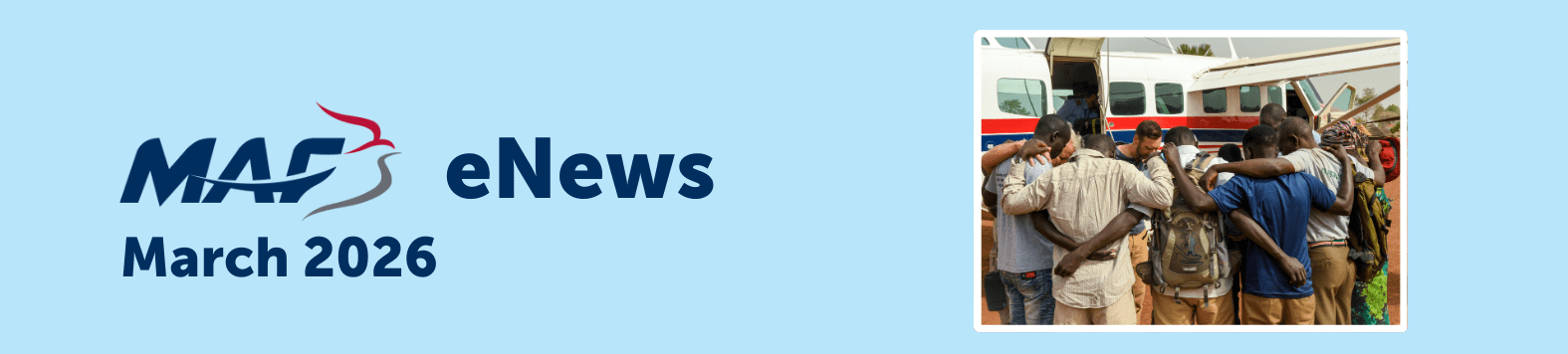
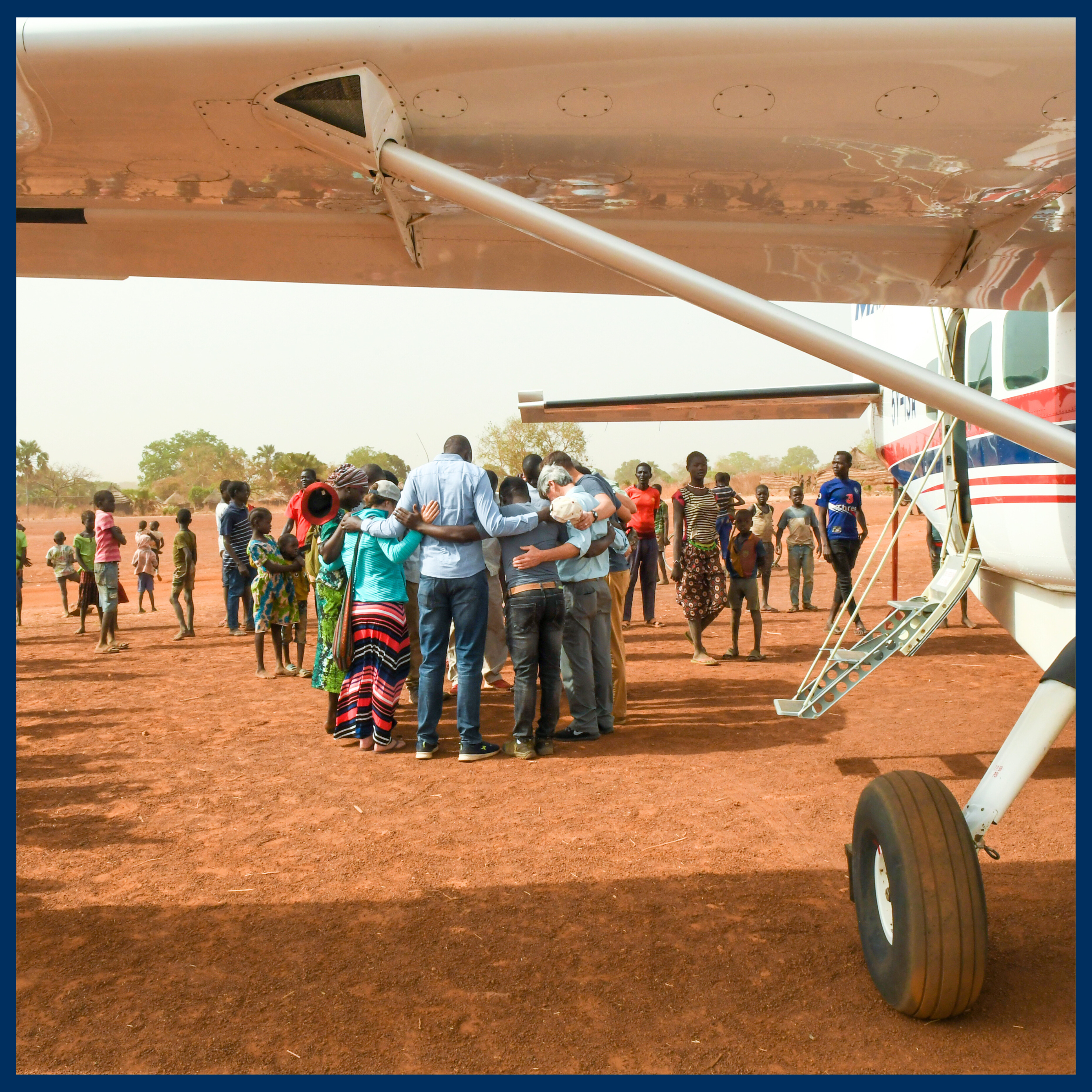
At MAF, we see every day how prayer makes a difference. Before every flight. Before every medevac. Before help, hope and healing reach isolated communities – we pray.
Today, March 6, is the World Day of Prayer. Christians around the world are uniting in prayer – across nations, languages and cultures.
Today, would you take a moment to pray for MAF and the communities we serve?
Please pray for:
- Isolated families in remote areas – that they would know God’s presence and provision.
- Safety for MAF pilots, engineers and staff serving in challenging environments.
- Unity and growth in God’s Church worldwide.
Thank you.
Prayer isn’t just for one day.
We invite you to stand in prayer with us throughout the year. When Christians pray together, mission moves forward. Your prayers are not peripheral, they are part of what carries each flight.
Sign up to receive our monthly prayer newsletter – ‘Fuelled by Prayer’.
Thank you again for praying for the work of MAF. Please read on below for inspiring stories of answered prayer from around the world.
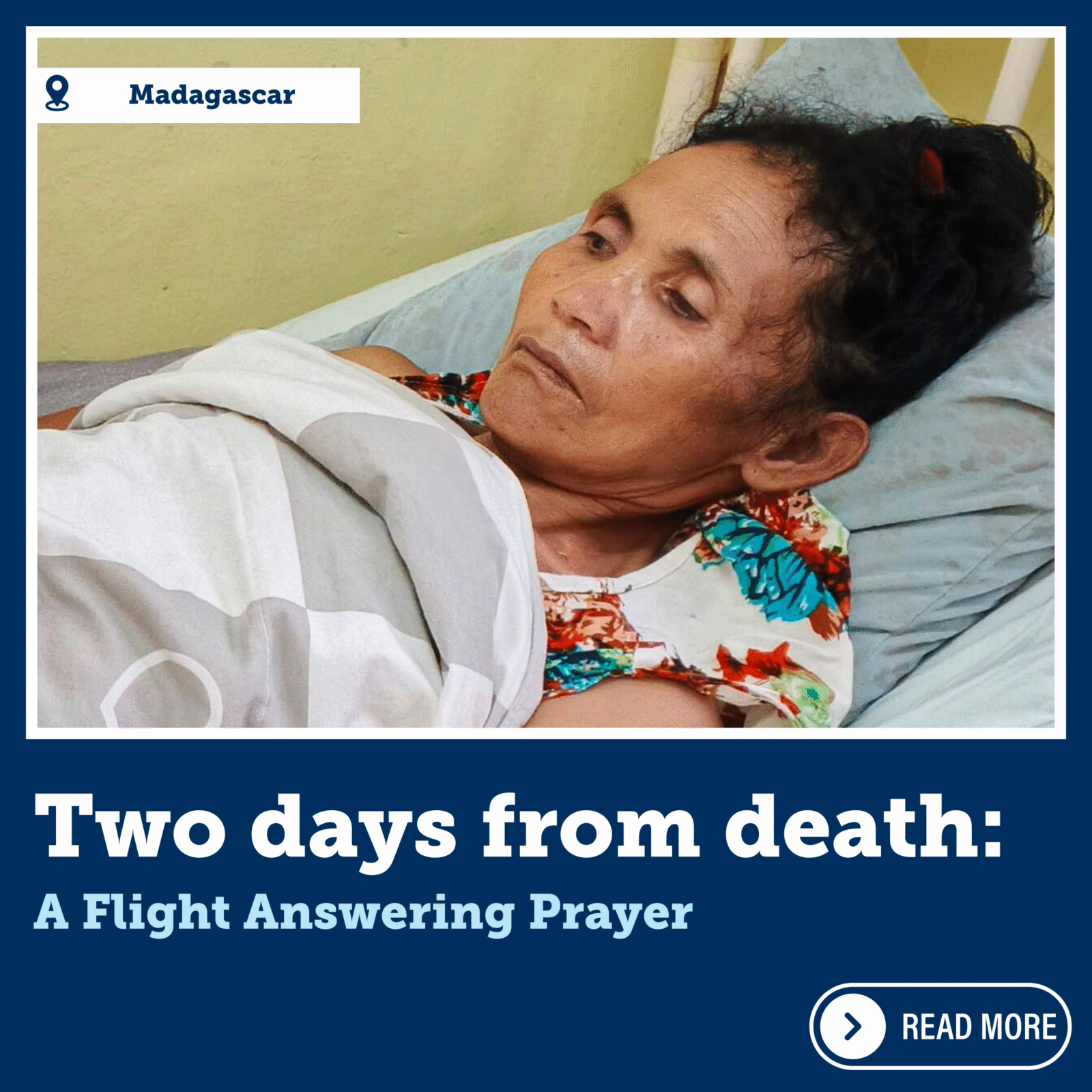
Two days from death: Meltine saved by dawn flight
A daughter recounts the night journey, unexpected flight, and urgent surgery that saved her mother’s life.
Story by Gino Antsatiana Randrianasolo
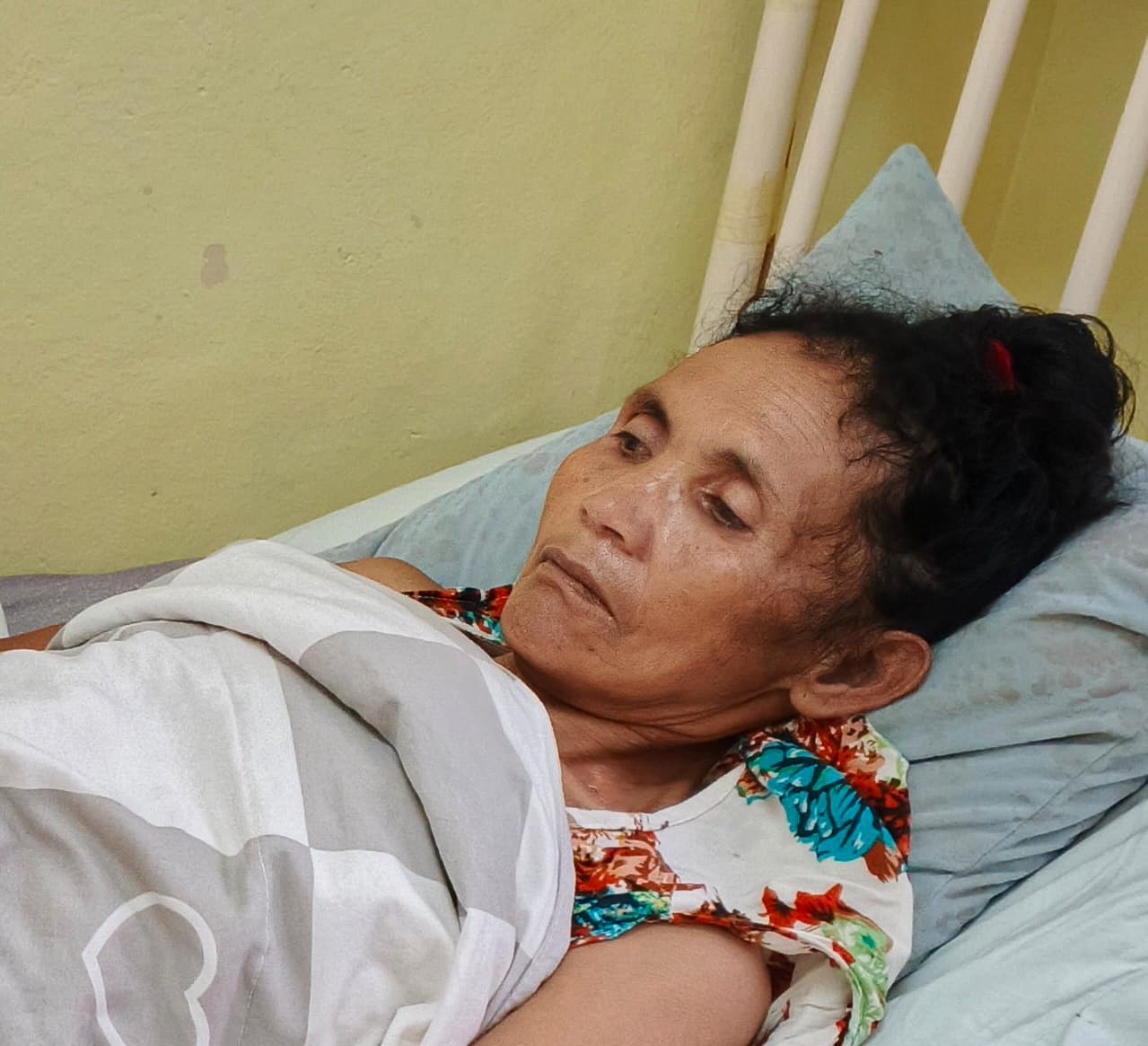
When Rasoarimalala Meltine was safely flown home after nearly a month of treatment, her family knew they had witnessed something far greater than medical skill alone.
“If we were only two days late,” her daughter, Rakotoarison Landihasina Yollande, said, “she would have died.”
Meltine, a 58-year-old mother of seven, had suddenly fallen ill.
What began as a simple flu worsened rapidly, as Meltine stopped eating and suffered from fevers. Concerned, her relatives brought her from her home in the capital, Antananarivo, to the nearest best-equipped hospital in Ihazolava, a larger town in the district of Ambatolampy, Antsirabe. There, doctors conducted examinations and radiography, but a diagnosis remained uncertain.
“We didn’t realise yet how serious it was,” Landihasina said. “I don’t know much about medical conditions, so at first, I wasn’t too worried.”
Everything changed when the test results were sent to Good News Hospital in Mandritsara, where one of Meltine’s daughters works as a nurse.
“When the response came back from Mandritsara, we knew immediately that her condition was very serious.” Doctors in Ihazolava warned that waiting to transfer Meltine for surgery by road could be fatal.
Meanwhile, the family hesitated to seek care locally in Antananarivo, the capital. Mandritsara, despite its distant location in the island’s north, felt like the right place. That was when the family received unexpected instructions: a flight had been scheduled to spare them the 30-hour drive. Meltine’s daughter at Good News Hospital had coordinated an emergency flight with MAF.
“We knew nothing about MAF,” Landihasina said. “We were simply told, ‘Go to the airport as fast as possible.’”
The 96 km journey itself was an ordeal. They left Ihazolava hospital at 8 pm and arrived at the airport around 1 am, slowed by poor roads. But at sunrise, Meltine was airborne. “I was operated on the same day,” Meltine said. “That afternoon.” Doctors later told the family that she ideally should have had surgery that morning, but another procedure was already underway. The operation began at 1 pm and ended at 3:30 pm – and was successful.
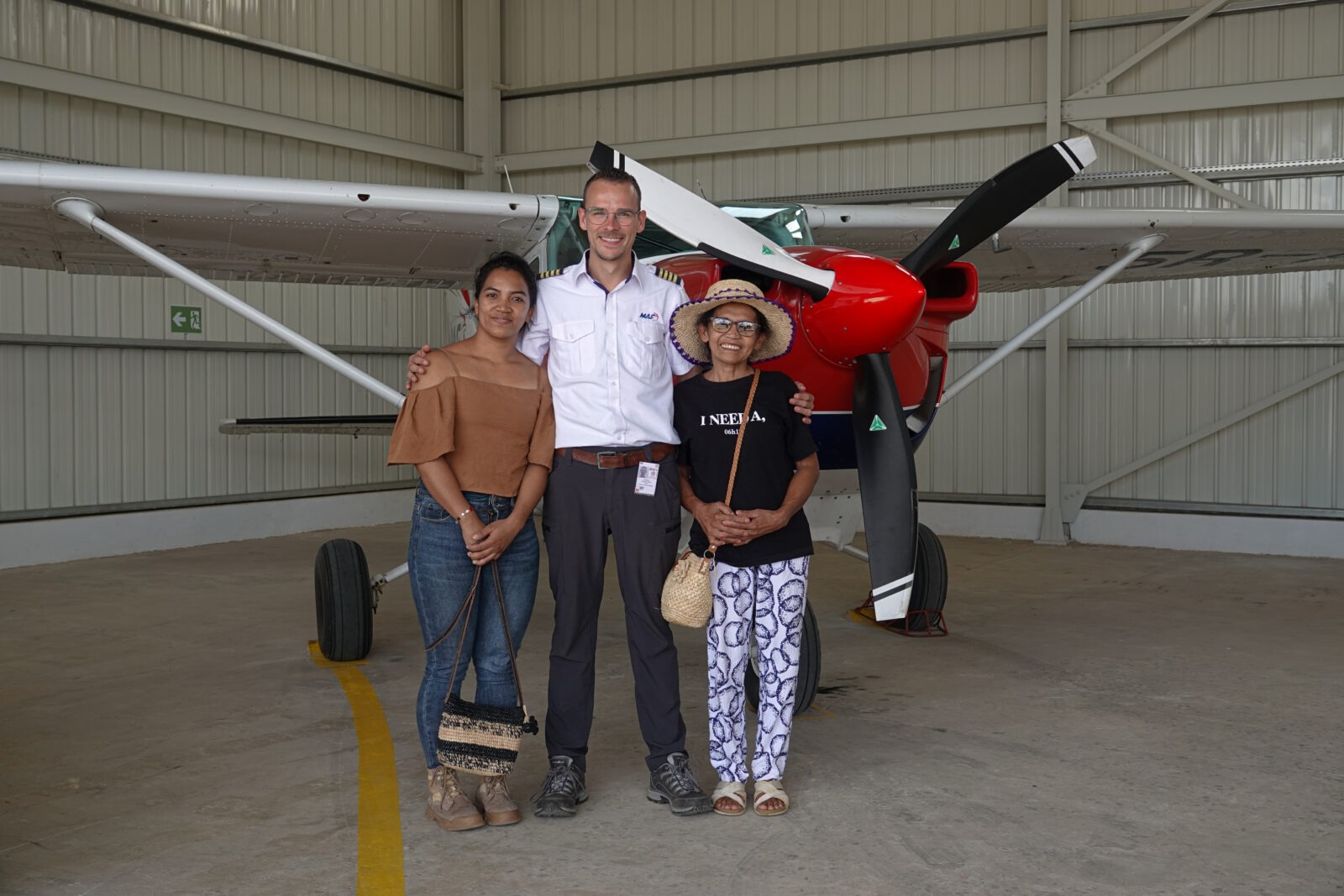
“I had already accepted whatever God wanted,” Landihasina added. “But God was in control of everything. He kept my mother alive.” Meltine stayed in Mandritsara for nearly a month to recover. Recently, she and Landihasina flew back home to the capital, this time with relief instead of fear. “We don’t always know the full story of our passengers,” Rutger Bakker, the pilot, said. “But hearing what this woman had been through was a reminder that every flight matters, even when we don’t see the whole picture.”
The experience also changed how Landihasina sees MAF.
“We had heard about MAF before,” she said. “Our church prays for MAF when we pray for evangelisation, but we didn’t really know much about what they do. Now we know more.” What once sounded like the name of a distant ministry became a lifeline when time was running out.
“God was there the whole time,” Landihasina said.
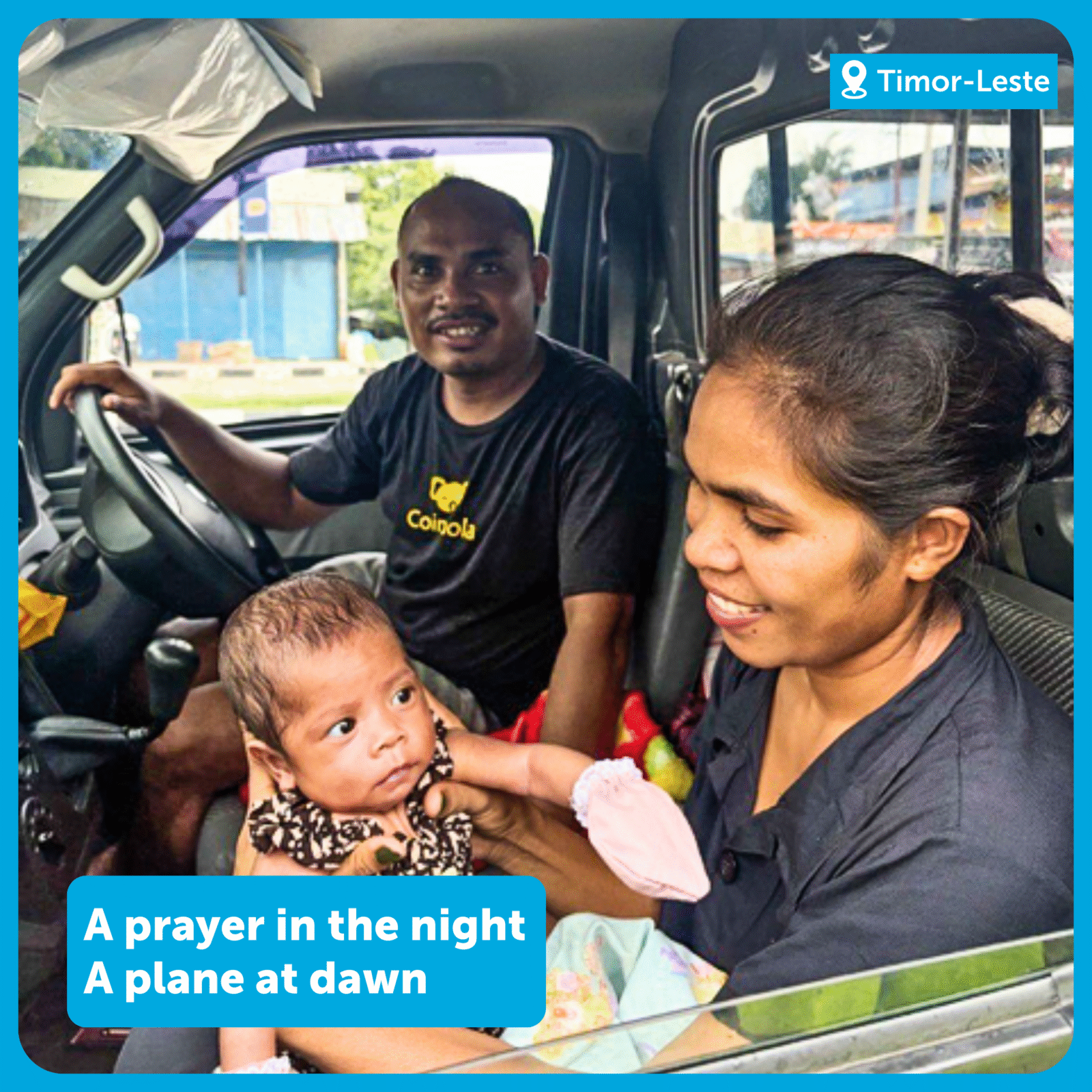
A prayer in the night, a plane in the dawn
When the local hospital told Marcelino that either his wife or newborn might not survive without urgent help, hope arrived in the form of a small MAF aircraft.
Story by Mary Domtta
As xefe aldeia – the village chief – Marcelino Antones is used to caring for people – but one night he found himself fighting for the lives of his own family.
“It was after midnight when the doctor told us that an operation was badly needed to save both my wife and our baby,” Marcelino said. In the middle of the night, he had woken to find his wife Amonia de Lima in premature labour.
The caesarean section was performed at the local hospital in Suai, Timor-Leste, but immediately afterward the situation became critical. The medical team told 33-year-old Marcelino that the baby might not survive without urgent higher-level care in Dili.
Suai is a 5-to-6-hour drive over mountainous terrain from the national hospital in Dili.
“If it were not for the MAF plane,” he said, “it would be like the old days when we had to travel by bus or ambulance when there was no plane – and maybe baby Amonia or my wife might not have made it.”
In Timor-Leste, babies are sometimes not named immediately and are known by the mother’s name. Amonia is this baby girl’s mother, and so her baby is known as ‘baby
Amonia’.
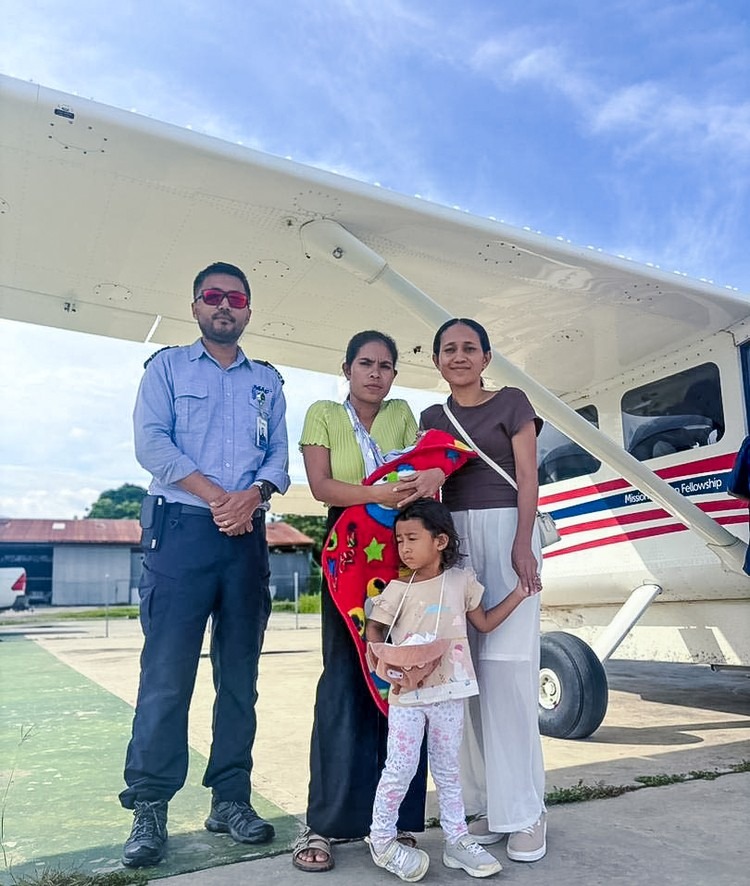
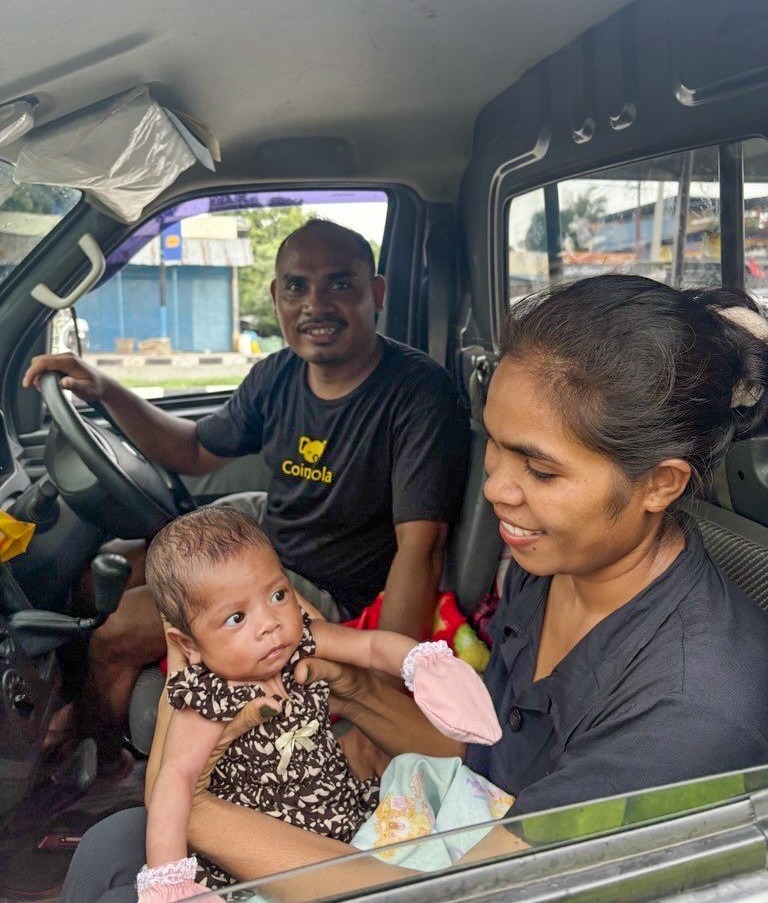
The local council helped arrange an emergency medical evacuation, and the availability of the MAF aircraft brought unexpected relief to this family of farmers. “My wife felt very happy at that time because the MAF plane was available,” he said. Amonia, recovering from the surgery and suffering from severe headaches, was not able to accompany her baby to Dili, but in fact followed five days later on another MAF medevac flight.
For Marcelino, watching the aircraft arrive the next morning felt like hope finally breaking through fear. Both child, and later mother, received prompt treatment upon arriving in Dili, after their individual flights of only 30 minutes.
“Baby Amonia and my wife, although still recovering, look so much better now,” he added. Born two months’ premature, baby Amonia was a tiny 1.5 kg, but is now 2.39kg and growing.
Through exhaustion and uncertainty, gratitude was woven into every moment.
“I felt sad, but I also felt proud that baby Amonia and my wife were able to make it to Dili,” Marcelino said.
“Even in difficult situations we are thankful to God,” he added. “Because He helped us in providing everything needed for our baby and my wife’s recovery.”
Subscribe to eNews
"*" indicates required fields